|
|
|||
|
An
Interview with by Dennis Hughes & Janice Hughes, Share Guide
Publishers |
|
||
|
Natural Weight Loss
Program recommended by The Share Guide
|
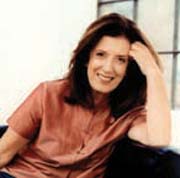
When Anita Roddick started The Body Shop in 1976, she was a young mother with absolutely no business experience. Running that first shop in Brighton, England taught her all about survival--and also that good business is about more than just finances. Twenty-five years later, The Body Shop is an international phenomenon. There are now over 1,700 stores serving over 84 million customers in 24 different languages. Yet The Body Shop remains as famous for its ethics as its success. Anita Roddick's visionary beliefs--in fair trade, environmental awareness, animal protection, respect for human rights, social campaigning--have remained intact throughout. [Note: Sadly, Anita died in 2007 at the age of 64.] Dennis Hughes: My first question relates to the subject of our theme, "Business and Spirituality." You have a quote in your book Business As Unusual: "Spirituality in business is not about religious ideas but rooted in concrete action of people whose sense of caring stands beyond themselves." Are you saying here that you think business leaders should shift their emphasis to the human spirit? Anita Roddick: Yes, that's exactly it. All through history, there have always been movements where business was not just about the accumulation of proceeds but also for the public good. Look at the Quakers&emdash;they were excellent business people that never lied, never stole; they cared for their employees and the community which gave them the wealth. They never took more money out than they put back in. It is a good example of how you can actually run a business. You can view it as not just a job but as an honorable livelihood where you can, by using your imagination, develop the human spirit. I believe this has been done brilliantly by some small and large organizations. It is difficult and it is work, but it can be done. I believe in businesses where you engage in creative thinking, and where you form some of your deepest relationships. If it isn't about the production of the human spirit, we are in big trouble. Dennis: So actually you are saying that instead of making the businesses shift their emphasis it is more a re-awakening of a consciousness that has always been, and going back to the old ways. Anita: Yes. Years ago nobody was elected on the economic ticket. It was either the education platform, or it was health or it was other issues. It is only recently that economic values have superceded every other human value. Dennis: You started The Body Shop back in 1976 I believe, so it is having its 25th anniversary this year? Anita: Yes. 25 years is a rite of passage and it gives you pause for reflection. When you run an entrepreneurial business, you have hurry sickness--you don't look back, you advance and consolidate. But it is such fun. I am trying to find thoughtful time, not just for reflection but to find the resonance of what's going on. Finding balance, that's what is difficult. If you can shape your business life or your working life, you can just look at it as another extension--you just fulfill all your values as a human being in the work place. If you are an activist, you bring the activism of your life into your business, or if you love creative art, you can bring that in. If I had learned more about business ahead of time, I would have been shaped into believing that it was only about finances and quality management. There is a sort of terrorism that comes with the operations and the science of making money, but by not knowing any of that, I had an amazing freedom. Dennis: In other words, you did not know it couldn't be done. Anita: Right! I hadn't a clue. I had never even read a book on economic theory. Dennis: When you started The Body Shop what were your main goals? Anita: My goal was livelihood. We don't use that word often enough. If I could give one piece of advice to anyone it's don't obsess with this notion that you have to turn everything you do in life into a business, because that ends up being a small version of a large company. But if you can create an honorable livelihood, where you take your skills and use them and you earn a living from it, it gives you a sense of freedom and allows you to balance your life the way you want. If we can actually bring in education, that polishes livelihood like they used to do in the old days, where there were apprenticeships for different skills like a woodworker or a blacksmith. This way is far more exciting and much more creative. For myself, I needed to earn money, to look after the kids while my husband was travelling for two years across South America. Dennis: What do you see as the difference between a livelihood and a business? Anita: If you take a measure of business, let's say a small start-up business, and you have the discipline, and you employ people, you create more than an income--you create and develop a process or strategy of developing it to make it bigger and bigger. That is the notion of it, expansion. But if you have a skill or interest and you polish it into a livelihood--in other words, you earn money for your survival plus your education plus travel, whatever, but you don't think big, that is a different thing. You're not thinking it's got to be bigger and bigger and bigger. Dennis: Does it become a business when you start hiring people? Anita: Definitely. For me it did. Then you really have to look at certain standards. You have to start playing by the rules and you have to honor paychecks and benefits, and you have to be disciplined. Dennis: I had my first business grow into a dozen employees and basically get too big and too complex, and so I sold it. This second one, the magazine, I kept a home business, and for nearly ten years it was just me and my wife, other than outside distributors and the printer. Now we have one employee, the same person for over two years. I guess it is a "keeping it closer to your livelihood" kind of thing. Now that we have a third person, we can take a break now and then. The downfall is that if you are a mom-and-pop operation and you have no help, it can burn you out. The good thing is that you don't have to worry too much about employees with just one or two. So to me, small and careful is good but having a little help is really a benefit. Anita: But still it is manageable at that stage. Dennis: Yes. I do have to pay employee taxes and keep it official now. Before we hired Lisa I didn't have to think beyond myself and my wife Janice. Anita: The hard thing when it grows larger is that you lose intimacy. Dennis: I have been tempted to grow this business, to get more people and make it bigger. But I remember what happened with the first one, and I want to have a little more free time now. So you just wanted to get your livelihood going when you started The Body Shop? Anita: The livelihood came about because women tend to say, "What can I do to make money?" Direct selling, knocking on doors and selling Tupperware really wasn't happening in England in those days. I traveled enormously during the 1960's, when you measured everything by where you traveled and what you did as travelers. I traveled in mostly pre-industrial areas. Because I have the interest of living with indigenous groups of people and pre-industrial groups, I learned so much. For example, when your shampoo is gone, you end up mashing up stuff to put in your hair. You put on mayonnaise, eggs, anything to clean and scrub. It is real experiences that change your values. Dennis: This was before The Body Shop started? Anita: Years before, when I was in my twenties. Dennis: How old were you when The Body Shop started? Anita: Thirty-four. Everything back then was small scale. My kids were young, they were about 3 and 5, so I wanted something easy--you know, close the door at five o'clock. So I had this idea of making little products like shampoo and so forth using ingredients I had found when I traveled. Actually, the biggest influence for me in setting up the first store was Spaghetti Westerns. . .you know, with Clint Eastwood. In those movies there were these dusty old towns, and you see a general store and you go up some dusty wooden steps and everything was rough-hewn, rustic looking--that was the image I had of what my shop could look like. Dennis: You wanted it to be old fashioned. Anita: Yes. So elemental. And that's exactly how it was because I couldn't afford to do anything anyway. I only had about 20 products. Dennis: Were you making all the products yourself? Anita: Not all of them. I had a little chemist that was making a few of the products. A lot of it is just raw ingredients like cocoa butter or lavender.We made it look like we had a lot of products though. When you entered the tiny 370 square foot shop, we had five sizes of everything, so it looked like we had 120 products. That really was genius, as I look back on it, because it gave people choices. Also, I could only afford a box of 700 empty bottles, so I told everybody to come back for refills. My Mum used to say it was like the times during WWII, when they recycled and re-used everything. I think that sort of good housekeeping or frugality, which would certainly be considered eccentric nowadays, was part of the idiosyncratic nature that set us apart. Nobody was stupid enough to offer 5 sizes of one product; it simply didn't make sense. We turned it around into a survivor's option: customers pick up the size they want and come back every week for a refill. Recycling had nothing to do with being environmentally conscious at that point. Dennis: So it was just an economic decision at first? Anita: Yes. The movement for the environment really only started in the mid 1970's. Dennis: And you were at the beginning of that wave. Anita: Yes. We were all social activists, and the activism sort of transferred itself into a new environmental movement. But at the beginning, the minimal packaging was because we didn't have any money. There was no option at all. We were most creative when our back was against the wall. One of the interesting things is once we started to get smarter and understand the issues more, and when we realized that we were going to be a real voice, then we ventured out with an extraordinary social justice agenda. We turned all the shops into action stations to educate the public on certain issues such as human rights. Right now we are doing this boycott of Exxon and then we're doing a huge global warming campaign with Greenpeace. Dennis: I know that in the past you've had places in the stores where people could sign petitions and get information. I haven't seen that so much lately. Anita: No, you haven't seen it in the past few years, but you will now. We just did a big industrial hemp campaign during the first week in June, 2001 and then there will be the global warming campaign. We have a new joint venture partner that is much more interested in getting the business right, and then focusing on the social agenda--which is just starting to happen. Dennis: They are both important. You are a successful business woman and a social activist, and the combo really excites me. But I have a question regarding the activism in the stores. I was recently killing time in the Atlanta airport and I had your book Business as Unusual with me because I was reading it on the plane in preparation for this interview. The Body Shop has a store in the airport, and I saw the book cover on a little cardboard sign. But I was very disappointed that the young women working in the store really didn't know about your book or about the social mission. They don't have much of that in my local Santa Rosa, CA store either. Anita: You are right. I think it has to do with the notion in America that education in terms of social values is secondary. Also, so many people are part-time, which is really rare in Europe. Dennis: I think it would be great if you and I and those like us could make Americans more aware. I actually took the time to show the store clerks your book since I had it with me and told them a little bit about it. They were very receptive. Anita: I think what I have lost in America in the past few years is communication skills on these issues. One of the things I absolutely want to bring back is more communication about what we do with PBS stories, such as the one they just did in Nicaragua. Unfortunately, for the past two to three years the values have not been high in terms of staff education. That is changing. It has to change, under my direction. There is nothing more motivating than when you have a young shop and they realize they can bring their values to the workplace. Dennis: It seems that the awareness in the stores has been much greater in Europe than in America. Anita: The difference is night and day. In Germany the refills are at about 80%, in England, less, but America they just don't care. It's just an extraordinary waste. Dennis: Here's another question: Many folks I know are socially active and share our values but suffer from what we call poverty consciousness--feeling consciously or subconsciously that too much success is bad, that money is evil. What are your thoughts on this and did you struggle with any of these feelings when your business started to take off? Anita: It came late in my life, you know, in my 40's. But I always had a courageous human spirit. At The Body Shop we had always been measured by how many jobs we had created, and I got a major award from the Queen on that. We are active in all of the most unpopular causes, whether it's human rights or the poor independent farmer in this country that is an endangered species. We are really doing grass roots community organizing and building. I have smart kids, and they realize that their gift is their health and their joy and their family and their intelligence and they will be superb at administering monies, because they're activists both. The most bizarre thing is that the media thinks I'm nuts. But the minute we went public on the stock market, which is how our wealth was created, it was no longer how many people you employed, it was how much you were worth and how much money you made for the stockholders. Dennis: Are you going to leave all your money to The Body Shop Foundation? Anita: I don't even think that it will be a foundation at that point. It'll probably be privately funded. I also have the Roddick Foundation, which is quite political. If I could mash the two together, that would be interesting. Dennis: So there are two different foundations that do different work? Anita: Yes, at the moment. We do different things with them. The Body Shop Foundation is run by our staff and supports social activism and environmental activism. We don't tend to support big agencies. We work within the communities and it is an interesting and profoundly effective foundation because money spent directly assisting community organizing or grass roots groups is money well spent. Dennis: You often refer to businesses that you admire, like Patagonia and Ben and Jerry's. Are there any others that you would like to mention? Anita: There are a ton of them in Europe. Scandinavian businesses, by law, have to have much more of an agenda of responsibility. But it's really hard to find a publicly listed company in the stock market that can push out the agenda. If I wanted to maximize my profits, which is supposed to be this country's duty of business, I would have to lie and sell anti-aging cream, which is one of the greatest, most insidious lies out there. I am not intending to do that even though it is one of the most profitable products in the beauty industry. If I wanted to maximize my profits I would take the two or three months that we do campaigning, which comes to about 3-4 million quid, and put it into keeping the shareholders happy. But I am not interested in maximizing the wealth of shareholders; I am interested in keeping my company breathlessly alive and socially active. I'm consistently trying to define spirituality in business. Dennis: What do the shareholders say about that? Anita: They don't say anything. Dennis: Are still getting a decent profit? Anita: Yes, they get great dividends. Dennis: Since they are getting their dividends they don't mind this social action? Anita: If the prices are not that good at the moment that's because the bloody business is not very well run. It has nothing to do with the social agenda. We save a huge amount of money by not advertising, and by not going around in Lear jets, or having obscene compensation packages like many others do. Dennis: So instead of putting money in the wrong pockets, you can put part of it into socially conscious things? Anita: Right. One of the reasons for wanting to go private again is to be able to legitimately give more money away. We give I don't know how many millions to shareholders, when we could be doing other things. Think of the amount of schools we could build. . .we are building quite a lot anyway though. To me, the joy of making this business successful is giving stuff away. Dennis: You mention in your book that you are buying back some of the franchises. Anita: Yes. A lot of us started in our 40's and are now pushing 60. Some people just want to go fishing or something like that. But some I think will go to the grave with the company. I have franchises in Canada, Australia, New Zealand, Sweden that could just go on and may never retire because they are such guardians of the gate posts. Dennis: In the same way that one can buy back franchises, could you also buy back shares and re-privatize the company? Anita: We tried twice but we got cold feet. We didn't know who we were getting into bed with. We don't know any bankers, and you have to borrow the money and go to a major level of borrowing. Suddenly we realized we were going to have these guys on our board and they would say, "You know, maybe you shouldn't be spending so much money on the social campaigns." So we just stopped. Dennis: Do you think that in America companies like Patagonia and Ben & Jerry's are very rare because it's so hard to go public and still keep a good agenda? Anita: You can define social responsibility in various ways. How good are you to your employees? What about education? How about diversity? There are companies that are famous for doing well in one area, but the notion of maximizing profits often gets in the way. I think it is truly rare for a company to have a mentality where the values of the employer are equal to the values of the financial investors and also equal to the values of the community. Dennis: It seems that more small companies can think that way. Anita: Yes, the ones that aren't controlled by financial institutions. Financial Fascism is "only the strong survive." There is no agenda other than financially increasing the bottom line--which doesn't include human rights or social justice or environmental protection. As a business owner, I want to be penalized if I screw up. And I think businesses should be banned from entry into any country if they try to sell products made with sweatshop labor. It amazes me how Wal-Mart has gotten away with it. Dennis: I think part of the problem is the original Corporate Charter: the way it is set up in America, there is no social agenda. Anita: Yes, you're right. In our country we call it Articles of Association. These are important legal documents. In ours, we dedicated The Body Shop to social and environmental changes and human advocacy. That had to be 70% of all our shareholders. Dennis: You did this when you incorporated? How long after you started did you do that? Anita: We did it when we went on the stock market in1984, eight years after we started. Dennis: Some people with small companies or individual home businesses may think they are too little to have an effect. Anita: I don't think that's true. Take a look at what the small company does to keep a community happy. Then look at big corporations--how many people did they fire? Take a look at Motorola, for example, with 3,000 people out of a job while the CEOs picked up 2 million dollars in bonuses. Big businesses are consistently looking for cheap labor, closing up factories and moving out to countries where there are no human rights standards or environmental standards. The backbone of this country is the small 1 to 5 people businesses, I think. If there is one bit of advice I have for people it is to buy locally and support local business. There is a wonderful restaurant in upstate New York called the 17-Miles Restaurant. They only bring in produce within a 17-mile radius. Phenomenal idea! Organic stuff that is not shipped from around the world. I think that is truly the way to go. Dennis: You have quite a bit of self-confidence, what they call spunk here in America, and a willingness to challenge the stuffed shirts in the corporate world. Do you feel that your childhood exposure to business, your parents running their own business, had anything to do with this? Anita: It wasn't about business. It had to do with being an outsider. We were the only Italian immigrants in this little blue-collar town, and we were outsiders. My mother was the most eccentric and extraordinarily beautiful woman, and a young widow at 39, so she had this dramatic aura around her. She raised 4 kids by herself. I remember her hating the priest because she didn't want to give my father a Catholic burial. She was an atheist and she was annoyed at sending the kids to church so she spread garlic all over our coats so it would stink up half the church. We were pushed into exercises of bravery. You couldn't be a meek and mild person with my Mum around. Dennis: And since you were Italian immigrants in England, that caused you to be spunky as well. Anita: I guess that's true. And we worked very hard. Dennis: Have you allowed yourself time for vacation, rest, to rejuvenate yourself? Anita: One of the dark side is you weren't given leisure. Our concept of work as kids. . .we were the original child labor. We had to work in my Mum's café all the time, so we didn't understand leisure. Dennis: And once you got The Body Shop going you were still stuck with that work ethic? Anita: The dark sides of success is that you have an overextended notion of responsibility. That you have to work on behalf of everybody else, and take care of everything. The second thing is you feel you don't deserve it, which is really a Catholic thing. You define yourself by your work and your sense of being alive. Maybe it is an addiction to new experiences. It's not really work for me because I have no idea what work is anymore. . .it is so much a part of my life in terms of the activism. I shaped The Body Shop into who I am: activist, social agitator, radical, crazy in terms of theatrical, all of that stuff. Dennis: So you don't take breaks? Anita: Not a vacation like going into a hotel and La de da. I spent a month in Nicaragua working alongside the sesame farmers and that was a joy. And I spent some time with the Black Farmer's Cooperative in Alabama and Mississippi trailing from one farm to the other. Dennis: Let's return to the stores for a minute. You are hiring people for more than just a job. You are trying to create a sense of community in the stores themselves, aren't you? Anita: Yes, but that is easier done when you have 2000 people in the workplace, which we have at our International Headquarters in Littlehampton. To create a sense community, we bring in all different age groups: parents and grandkids and kids can all work together in The Body Shop. Community was really much more polished after we set up a child development center attached to the workplace. It has about 50 kids up to the age of five years, and another 50 up to age 12 during holidays. We offer paternity and maternity leave as well, so the family was being protected. We also have this great idea called the Love Program which allows any member of our staff to be given 100 quid a year to use on any skill that has nothing to do with the business, whether it's studying fear of spiders or tightrope walking or whatever. That has been a great plus. We also do community volunteering, where each department goes and does something in the community. At the big headquarters it is a really creative place; there is very much of a carnival atmosphere. Dennis: So you've got a couple thousand people working at the Littlehampton headquarters, and in one location its possible to create a sense of community. But it is a whole other animal with the different stores around the world, isn't it? Anita: I think the Australian stores are probably the most highly polished in terms of the community. They even have their own vegetarian restaurant on site, and an Olympic sized swimming pool. In Ireland the shops won't even advertise products in their windows at Christmas, because they are working on political issues. Canada has a strong community for peace, very much like we do in England. And Australia, they have this huge community strength around the issue of domestic violence. But some countries just don't do anything. Dennis: Here in America it seems like most of The Body Shops I have seen are in shopping malls rather than in downtown. Anita: I think that was one of the big mistakes I made early on, thinking that I had to be in the shopping malls. We are focusing on street side locations now. Dennis: The malls generate business but they suck the energy out of downtown, the heart of the community. Anita: They are monuments that don't communicate, and they're bloody boring! The mall stores, especially in New Hampshire, are just pathetic about some of the issues we wanted to raise. They complained when we did the "Thank You For Our Dream, Dr. King" day. They complained when we had our Self-Esteem Day. They are always complaining about the political imaging that we do. I remember being interviewed in one of the malls in New Hampshire about a voter registration campaign we were doing. Security came up and said, "What are you doing?" like the only thing you can do here is trade. We were told that we shouldn't be putting up posters with Dr. Martin Luther King's face on them, because we weren't here for public education. Dennis: I notice that you've got your headquarters in Burlingame, California. And you have another headquarters in North Carolina? Anita: North Carolina is mostly for distribution. Marketing and product development for the American regions is in Burlingame. Dennis: Why did you choose to be in Northern California? Anita: The bigger question was why North Carolina (which was a very good idea, since we were originally in New Jersey). We picked North Carolina because it allowed all our staff the chance to have a great house, because it was an affordable area. It was a great place but it was a cemetery for creative marketing of ideas. We created this huge distribution center, expecting to be opening up 50 to 60 stores a year, but that never really happened. After about 7 years the sales really dropped. Competition came in furiously. So we just decided we wouldn't develop North Carolina. What we needed was some smart thinking. I desperately wanted to get to San Francisco, which is more our type of town with our type of people. Dennis: So you wanted the creativity of California. . . Anita: I love San Francisco. It was my former home when I was with Mother Jones. It is fun; it is the most European of the American cities. There's a great community and there is right thinking. In Northern California they haven't got the hardened political cynicism of the East Coast. And of course it is so bloody lovely! Dennis: What do you say to environmentalists that believe remote indigenous tribes should be left completely alone and not traded with? Anita: I tell them to dream on, because they have been trading with people for years. That is a very imperialistic viewpoint. You speak to most indigenous people and their livelihood is trading. The real issue is whether or not you abuse them. Some the loggers will bring in alcohol and tobacco. There is no indigenous group that hasn't been discovered now anyway. Everywhere I go they've been discovered. Remote is definitely gone, going on 40 years now. Dennis: How about saying a little about NGO's, non government organizations, and how more conscious consumers are changing the business world? Anita: There is a big conspiracy of silence in America, regarding this huge rise of the NGO's, who are utterly powerful now. We ignore them at our peril. I'm talking about Greenpeace or Rainforest Action Network or Friends of the Earth or Global Exchange. They have the moral agenda that politicians don't have. These are incredibly profound, intelligent, thoughtful and daring organizations. I'd rather put my monies with them than any sort of marketing agency. If you take a look at any consumer research, politicians are not regarded as either honorable or honest but NGO's are. People are really listening to them. People will listen to Social Venture Network or Human Rights Watch or whatever, and they will not listen to politicians and believe that the politicians have anything other than their own career advancement as their agenda. I think the most interesting thing is the ways that businesses and NGO's are working together, and almost ignoring the political system. Dennis: Apparently consumer awareness is growing, such as with Levi's when it came out that they were made in China and their sales suffered. Consumer opinion is really making a difference now in how companies run their business. Anita: I think that more companies are now realizing it's corporate reputation at stake and what they fear mostly is consumer revolt. I think what's needed is the powerful forces of non-government organizations working alongside direct action specialists, such as the Ethical Investment Fund and the church organizations. I think there's got to be a more revolutionary kindness in business. What I find is they're doing reputation management. Take companies like Exxon or Shell or Nike, they employ dozens of public relations companies, these sultans of sleaze, that try to whitewash their image. But we have the internet now, and we need to get the information out and wake people up! Dennis: Didn't you write another book, in the early 90's? Anita: Yes, Body and Soul was the first one. It was my first autobiography, covering the first ten years into The Body Shop. Business As Unusual took over where that one left off. I am an idea person. . .I don't need to author too much, I just need to corral and gather together. There are some good books that I can muster on different things, but I am really interested in grass roots stuff. I want to be able to do some work in India and in Taiwan. I just want to get in those areas and make education accessible. You know, like the pamphlets that get information out which isn't controlled by the big publishing organizations that want expensive, heavy duty hardbacks. With my books, no rights are reserved--you take anything you want, use it well, our knowledge is free. Just credit the people involved and hopefully donate some money to NGO's. Related Info: How to Get Your Voice Heard in Congress The Truth About Your Drinking Water The Ecological Footprint Align Your Career with Your Heart's Vision Program Yourself for Success Fulfilling Your Dreams with The Seven Spiritual Laws of Success MORE
ARTICLES Home |
||
|
|
|||
|
|
|
||

 If
you liked this interview, you'll
love The Share Guide's
If
you liked this interview, you'll
love The Share Guide's