|
|
|||
|
|
|
||
|
|
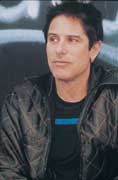
Jai Uttal is a pioneer in the world music community. His eclectic East-meets-West sound has put his music at the forefront of the world fusion movement. Jai Uttal's musical roots embrace a rich variety of cultures and traditions that span the globe and the centuries. From the hillbilly music of the Appalachian mountains to the passionate strains of Bengali street singers, from the haunting rhythms and melodies of ancient India to contemporary electric rock sounds, Jai's music distills the essence of diverse musical forms. His best-selling CDs include Shiva Station, Nectar and Mondo Rama. The Share Guide: As a musician you draw mainly from the spiritual tradition of Bhakti Yoga. How do you feel that music aids in the healing process? Jai Uttal: There are so many levels. I think the healing process stems from the heart, stems from love and understanding, and from permission to feel everything. Music that helps that process of feeling is healing music. Particularly, it's music that gives you a feeling of your own heart, and at the same time gives you a perspective of the vastness of the universe. To me, that's another phase of healing. Of course, prayer is a big part of healing; music that incorporates prayer will also lead to healing. Then there is the whole field of Sound Healing, which doesn't even deal with the emotional body so to speak, but with the way that some sound can adjust the molecules in the body and bring things more into harmony. I haven't gotten deeply into that with my own music, although I have studied it quite a bit. With my own records I am dealing a bit more with dance music and rock elements, so it doesn't always have that aspect. Then there is the healing quality of the voice, which I feel my music is focused on more and more. The Share Guide: What you do when you perform at a concert or any sort of kirtan is bring people together, which is a healing force in the community. Jai Uttal: Yes. The majority of what I do is kirtans, which turn into evenings of group communal singing. That is an amazing process to watch. It comes from ancient days in India where people would gather and channel their prayers together. The Share Guide: To be clear, since all of our readers may not know as much of the Eastern words as you and me, kirtans are Indian chanting. When I visited your website, I learned that as well as doing big performances, you offer smaller kirtans at meditation centers and so forth. It may be the same kind of music, but two styles of outlets. Jai Uttal: That's right. Recently I have been leading kirtans at a lot of yoga schools and meditation centers around the country, and around the world actually. Some of these appearances are basically leading a group in singing chants, and some are more workshop oriented, where I give a background talk and we share our thoughts and feelings and tell stories in this tradition. I think people are really opening up to this practice. The exotic aspect is kind of cool at first, but when it can become part of one's daily life, that's when it really clicks into a real transformational healing practice. The Share Guide: What is the difference between bhajans and kirtans? Jai Uttal: Kirtans are all mantras (ancient Sanskrit words). The bhajans are more poetry; they are Indian devotional songs. The Share Guide: So the kirtan is focusing on the mantra, short repeated phrases, which have been chanted for centuries. There is a stream of consciousness and a flow that has been unbroken for centuries as a vibratory power in the air that you tap into. Jai Uttal: Yes, well said. There is something about chanting mantras and investing our own energy into that chanting that is very powerful. I feel like we join our souls with all the people who sing it. The Share Guide: I've read that mantras are ancient words, sometimes called the primordial language of the Gods, so it seems like through chanting we are bringing spiritual energy into the earth plane--and into our own lives. Jai Uttal: I totally agree with you. In an evening of kirtan, our energy in the group becomes bigger and bigger, and expands into past and present, above and below. At the same time, divine energy comes through us and spreads on the earth. I wish more and more people would do this in different ways, because we need it now. The Share Guide: I've heard you call your music "World Fusion." I was wondering how this differs from what is called "New Age Music" and wondering if "World Fusion" is the same as "World Beat?" Jai Uttal: I don't really resonate with the titles that are used in the media to describe music. It seems that there is always a desire to reduce something to one or two words. Descriptions can mean totally different things to different people. Currently, I call my music "World Heart" music or "Heart Fusion" music, because I use the elements of many different kinds of music from varying cultures to express and open the channel of the heart. The Share Guide: Labels are double-edged swords; they can be helpful and they can also be a drag. I'm not sure all of our readers have played as much of the new music that has come out as you and I have. I just want our audience to understand the type of music you are producing. Jai Uttal: The New Age category is a little bit outdated. "New Age" started out as referring to music for serenity--quiet music that didn't have much rhythm, tempo, tension, or variation. The Share Guide: You might call it ambient music. Jai: Yes. The New Age category has progressed and gradually expanded to include different kinds of rhythms, beats and elements. World music or what they are now calling "World Beat" has touched corners with New Age, and they are overlapping, which can create confusion. The music that I do is not always peaceful. Some of it is, but some of it isn't, and that is simply because I don't always feel peaceful. I try to express my being with all my heart through my music and channel the different moods. The spiritual tradition I have come out of is called Bhakti Yoga. That involves directing all the emotions of the heart to the universal spirit; not just sweet, happy, calm, and peaceful emotions but every emotion can be directed towards and channeled through this kind of divine energy. The Share Guide: Even though you were born and raised in the United States, your music has a distinct East/West blend to it. Jai: Yes, I have studied Indian music extensively. The Share Guide: What drew you first to the music of other cultures? Jai: I think it was probably a past life. I grew up in New York. In the big city you are exposed to lots of different things. When I first heard Indian music, I was transfixed. I got every record that I could find and there weren't that many of them back then. I would listen and play along with my guitar and try to understand it. It was more like an awakening, some rememberance inside of me. I also listened to a lot of other music at the time--African music, Middle Eastern music--but it was the Indian music that really grabbed me at first. The Share Guide: So Indian music is your main influence, other than the Western culture you were raised in? Jai: Yes, I would say my influences are the devotional music of India, plus rock and roll and rhythm and blues. I have always been into Appalachian and Mountain music as well. I started studying Indian music over 30 years ago. Sometimes I have been very intensely involved in the studies and sometimes not. I still study now, although I am pretty lax in my efforts at this moment because I am working so much. I should say that I never felt that I was plucking some flowers of another culture to garnish the rest of my creative output. It always felt like it was coming from inside of me as much as the Western music. The Share Guide: Since I review a lot of the new music coming out, it's certainly worth saying that there is a great deal of quality instrumental music being produced. There is also a gradually increasing number of chanting artists. That section is starting to develop. I think it's the start of a breakthrough--taking these old Eastern mantras or positive phrases, and adding Western instruments to the vocals. Plus it's much better produced than anything we've had in the past, and therefore it's reaching more people. Jai: Yes, when it's done with electric guitars, bass and drums and whatnot, it really enters our stream of culture and consciousness. The Share Guide: I like the fact that you include the Western lyrics on your albums. The lyrics are primarily upbeat and life affirming. Do you write a lot of the them yourself? Jai: Yes, pretty much all of them except for a couple of covers. On Shiva Station I did a cover song "Calling You" which I first heard in the movie Baghdad Café. It's really a beautiful and spiritual song about longing. On the new album, Mondo Rama, I did a Beatles song and mixed it with a Sanskrit chant. The Share Guide: Yes, I wanted to mention that one. When I think back to junior high and high school, one of the first bands I was really aware of with positive lyrics was the Beatles. "All You Need Is Love" and other songs like that are basically positive mantras. George Harrison, as I see it, turned the West on to the music and the meditation of India. He introduced me, and many people, to Ravi Shankar, as well as Ali Akbar Khan. They were both with him on the Bangladesh Tour. You probably listened to this stuff as well as me, since we are in the same age group. So that leads me to mention your song called "Tomorrow Never Knows" on the newest album Mondo Rama. It's from the Beatles album Revolver, and you have combined that with the Indian chant, Shivaya. The track goes back and forth between the Eastern and Western lyrics, and I think it's very effective. I love it and it's got a great beat. I am wondering what gave you the idea to do this? Jai: I was invited to New York three or four years ago, to perform at this big party that was launching a John Lennon songwriting contest. There were a lot of big stars performing there and I was the least known person. They asked us each to sing two songs and one of them had to be a John Lennon song. I am such a John Lennon fan, but the last thing I wanted to do was try to re-create a Beatles thing or try to sound like the Beatles or sound like John Lennon. I just couldn't; I didn't even want to go there. So the thought came to take a John Lennon song and make it my own. I thought that the Sanskrit chant was very true to the spirit of the song. Some of the words from "Tommorow Never Knows" were taken, I believe, from the Tibetan Book of the Dead. The Share Guide: Lennon's lyrics go very well with the Shivaya chant. It's a great combo. The title of your newest album is Mondo Rama. What does this mean? Jai: Mondo means the world in a lot of different languages. Rama is one of the Sanskrit names of God. So it basically means to me that the world is Rama. Another way of thinking of it is that this world is big and crazy and it has everything in it, and it's all Rama, it's all God. The manifestations of God can be everything from the beautiful little Buddha that I'm looking at out of my window in the backyard to violence in the streets. It's all special to Rama. The Share Guide: Your first album Footprints was jazzier than its successors, with less vocals. You have gradually moved in the direction of more vocal music. Is that where your interest lies more these days? Jai: My interest has always been in vocal music from all cultures. What's happened is my confidence has increased. At first I was really shy to sing on a record. I didn't think I could do it. It wasn't even that I felt I had improved later on. I just decided that this is my expression and I have to put it out there for better or for worse. For now all my music revolves around singing. There are lots of other elements, of course, but I think the center is the voice. The Share Guide: I was really taken with your second album, Monkey. At that point you began to move more towards the Eastern direction. Jai: Yes, there is a big difference between Footprints and Monkey. The Share Guide: It seems like you became more confident in your voice. If you believe in your ability to do it, then you project more, and so it sounds better. Jai: I think that is true. I feel that everyone should sing. The Share Guide: If you sing fully, and really open your throat and really resonate, it vibrates your whole body. Jai: Right. Oxygen comes into all the cells and increases the life force energy, and purifies and burns off anti-oxidants. The Share Guide: If you consider your body to be a musical instrument, and your mouth is the sound hole, you are really resonating your whole instrument when you sing unless you are tightening your throat up. If you are singing positive lyrics, that's really bringing positive energy vibrating through your whole being. Jai: It's a truly full spectrum healing force…the words, the mantras, the prayers...that's all coming from the heart, and then the sound vibrates you, then the oxygen in the air enlivens you. It's pretty cool. The Share Guide: I recommend it to everybody. Jai: I do too! The Share Guide: What instrument did you start with and what are your favorites to play today? Jai: I started with piano, but I play a lot of different instruments now. I find that I go through different cycles with them. These days my favorite instrument to play is my new nylon string guitar. I have never had a nylon string guitar before and I just got one about a month ago and I am just loving it. I have been traveling to Brazil a lot. I'm getting into Brazilian music and trying to learn more about it. Sometimes I just love to play banjo and sometimes I play sarod. I actually play the harmonium a lot as well, but that is just to accompany my singing. I hardly ever sit down to play the harmonium if I'm not singing. Overall, the main instrument these days is the voice. Which is funny, because it is such a delicate instrument for me. If I don't sleep enough, or I am not eating right or have allergies, it's like the least dependable thing. Yet at the same time, it's the closest to the heart. The Share Guide: I believe you moved from New York to California to study with Ali Akbar Khan. You studied sarod and also voice at his School of Music? Jai: Yes. The Share Guide: I went there briefly. I bought my tabla set there. Jai: When did you go? The Share Guide: This would be the mid 70's. Jai: I wonder if I was there then. The Share Guide: I got interested in the tabla, and there is a local meditation center here in Sonoma County, California called the Ananda Center, where there are monthly kirtans. Jai: Is that connected with Ananda Village in Grass Valley? The Share Guide: Yes. Jai: I'm going up to Ananda Village tomorrow. The Share Guide: Grass Valley is the main one, but there are Ananda centers that are smaller in a lot of cities, with Yogananda being the main teacher in that lineage. There's one here in Santa Rosa where a few dozen people get together. There's Sunday services and a monthly kirtan. I was drawn to this music just as you were, but you studied a lot more extensively. So after studying with Ali Akbar you went to India and lived there for a while? Jai: I've been back and forth to India many times. The longest I stayed on one trip was seven months. The Share Guide: On one of your first trips you studied and played with the Bauls [pronounced Bowls], didn't you? Jai: Yes, I think that was my second trip there. I lived in West Bengal for a while with the Bauls and that was an amazing time. The Share Guide: Aren't they known for their vocal music? Jai: Vocal and instrumental. They play a lot of instruments, but it's mainly to support the vocals. It's an amazing and very devotional style. Their songs are geared to pierce the heavens in a sense, and take their souls along with the music. The Share Guide: Similar to Persian music? Jai: Yes, except it's not as dignified. They dance, they sing--the word Baul means madman. The Share Guide: In that music it seems sometimes that people are just wailing. It could even be the blues! They get into the feeling without even bothering with words. Jai: They stretch out words a lot so that it could almost sound like there are no words, but usually there is a text that they are singing. I love the Bauls. I love being with them. I learned so much from them. On my first trip to India, I was a with a teacher named Neem Karoli Baba. He's not a music teacher, just a spiritual being, who is my guru. He really changed the direction of my life. The Share Guide: He is well known from Ram Dass, Krishna Das and Bhagavan Das. So Neem Karoli Baba was influential with several artists we hear a lot in the West, including yourself. Jai: Yes, it's true. Being with him on my first trip to India, I heard a lot of kirtan. Prior to going to India the first time, I'd heard mainly classical Indian music, because in the U.S. that was what was available. The Share Guide: Like Ravi Shankar and Ali Akbar Khan? Jai: Right. I had already been studying with Ali Akbar Khan for about two years. By going to India I got exposed to other things, like the devotional songs, the kirtan and street music. The Share Guide: How are you able to apply the spiritual aspect of your work with your fellow musicians and with the general public, your listeners? You seem to have a team spirit with the band, working toward the spiritual expression. Jai: I think that just by being as true to my heart as I am able, the spiritual elements get across. I sometimes question things and go up and down with that. I struggle just like all of us. The Share Guide: With the Pagan Love Orchestra, the group of musicians you work with, it seems you have drawn together musicians with a similar goal. They must all like chanting or they wouldn't be interested? Jai: Exactly. There are many different musicians that work with me at the kirtans also. The Share Guide: When you approach a performance with a larger audience, whether it's the Health and Harmony Festival or some other big concert--as opposed to doing a kirtan at a yoga center where they are familiar with this kind of music--do you do anything differently, or do you think the music speaks for itself? Do you have to adjust the line up of songs at all? Jai: I have to trust that the intention and the music will speak for itself. I do sometimes adjust songs a little to what's appropriate. For instance, at an outdoor festival I won't do too many slow songs. It's not really a spiritual adjustment, it's more in relation to ambiance. Sometimes, if I feel like it's a more judgmental audience, I get a little nervous and a little more self-conscious and I try to overcome that, but that can also happen at yoga studios because of my own inner demons. The Share Guide: Would you say that there's a goal with your music? I guess every musician wants to please their audience, but you are trying to do more than get people to shake their booty. Jai: The goal is to open my own heart, to heal my own wounds and reach for God. I would say it's inner directed. It's great when everything comes together and everyone is doing that together, but I am certainly not trying to convert the audience. I want everybody to enjoy the music and have a good time, but those are only secondary intentions. The real intention is the soul work that I am doing for my own journey. The Share Guide: Right. Open your heart and shake your booty at the same time! If you are in a good space, then it all radiates out. Jai: Yes, then it all works. Generally speaking, you don't have a great experience onstage if the audience is having a terrible experience. There can be exceptions, but generally that is the way it works. The Share Guide: I'd like to end with a quote that is on your website. "World music is music from everywhere: music that creates bridges, music that unites hearts and cultures, music that brings peace." I like that a lot. Jai: Yes, I like that a lot too. For more information about Jai Uttal, visit www.jaiuttal.com. You'll find out more about the instruments he uses, his discography, upcoming appearances and more.
Home  Health Directory Articles Index Interviews Health Directory Articles Index InterviewsReviews Links About Share Guide Contact us |
||
|
|
|||
|
|
|
||



 If
you liked this interview, you'll
love The Share Guide's
If
you liked this interview, you'll
love The Share Guide's