
| Holistic Health Magazine & Resource Directory | Home Advertise Contact Us |
|
|
| Health Articles | Interviews | Product Reviews | Bookstore | Holistic Directory | ||||||
| Interview with Jack Canfield on Success and Self-Esteem Jack Canfield is one of America's leading experts in the development of human potential. In his book The Success Principles (coauthored with Janet Switzer), Canfield takes the principles that he's studied, taught, and lived for the past 30 years and offers them in a practical and inspiring guide that will help you get from where you are now to where you want to be. Jack Canfield and Mark Victor Hansen are the bestselling coauthors of the Chicken Soup for the Soul® series, currently with 32 different titles in print. Interview by Janice Hughes and Dennis Hughes, Share Guide Publishers The Share Guide: Your book, The Success Principles, is very large and comprehensive. How would you recommend reading through this book? Jack Canfield: This book is meant to be a blueprint for success. However, if you only know about the material and don't implement it, that's like knowing you should take vitamins but don't take them. Here's what I recommend to people if they want to get maximum value out of the book: find a partner or a group of people you know (what I call an accountability partner or a mastermind group in the book), could be a group at work, could be your family members, or people in your local church, and go through the book together one chapter at a time, or two or three chapters, and then put the principles into practice. When it says set goals for the seven areas of your life, set those goals. If it says write affirmations, write an affirmation for each goal. If it says look at the obstacles you're going to encounter and come up with three solutions for how you're going to get past those obstacles, do the paper and pencil part, and then share that verbally with your partners. This is important because what I've found is that whenever you declare a goal, or a commitment, or an action step out loud, there's something about saying it verbally that makes it more real to the subconscious. Then there's also another person in the world that's holding you accountable. If I tell you I'm going to lose 20 pounds and the next day you see me eating donuts, you're likely to say, "Hey Jack, I thought you were going to lose 20 pounds. How are you going to do it eating donuts?" But if you don't know I've made that commitment, you might not say anything. The Share Guide: Self-esteem seems to be one of the fundamental principles in the book. Jack Canfield: That's true. Self-esteem is a huge piece of my work. You have to believe it's possible and believe in yourself. Because after you've decided what you want, you have to believe it's possible, and possible for you, not just for other people. Then you need to seek out models, mentors, and coaches. You can also do it through books and tapes, I think live is more powerful. There is something about the energy you pick up in the field of someone who's pursuing their dreams that's different. It's almost like you catch the enthusiasm. The Share Guide: Don't you have a whole chapter on mentors in the book? Jack Canfield: Yes, it's called Find a Wing to Climb Under. I talk about how to seek out a mentor; how to approach them and how to talk to them so they'll say yes. If they feel they're going to be overwhelmed by you, then they're not going to want to do it, but if you say that you just need ten minutes on the phone once a month, they'll always give you more than that. That's a great way to get in the door. The Share Guide: When I was in my early twenties I had a role model with Swami Muktananda when I lived at his ashram in upstate New York. He had such a huge energy wave that you couldn't help but believe that if you followed the principles he was practicing that you could do whatever you wanted in the world. Jack Canfield: Whenever you're around someone who has a big vision, it's very inspirational, because it really touches the part of you that knows at the deepest level that you can do anything. The Share Guide: When you have an inspiring mentor, then when you go out in the world and you find a need that you want to fill, you believe in it and you have confidence and you can cut through the resistance. Jack Canfield: Yes. I think we do things in stages. No one goes out and changes the world from the get-go. I think what happens is you have a constantly expanding sphere of influence. I started in a high school classroom, and then it became the teachers of those kids, and then it became the teachers of those teachers in the universities that I was teaching. And then I started doing seminars for corporations, which turned into speaking at the World Business Council. I always tell people if you do what's in front of you well, then you'll get bumped up to the next level. You can have big visions, but make sure you're doing what's in front of you every day the best of your ability to bring that about success. The Share Guide: Right, you need to keep studying and get support because the resistance is out there. Jack Canfield: I have a whole chapter in my book on building your success team. A main principle of my success is building a team. The more you link up with others the more you can do. The Share Guide: Let's talk about goal setting. What if you don't know how long it will take to achieve a specific goal? Do you just take a guess? Jack Canfield: First, start with what the goal is. Obviously, if you want a $7 million estate and you say you want it tomorrow, that's unrealistic for most people. Unless, of course, you meet someone the next day who owns one already and get married! The chance of that is fairly slim, although it can happen. What I recommend people do is go out and do a little research. Say you wanted to own a boat, maybe a 200-foot yacht. Go to a yacht store, and find out what yachts cost. Then find out what a slip costs to put it into the harbor. You might also research what used yachts costs, and how often they become available. Perhaps there's a possibility of living on someone else's yacht and maintaining it, so you don't have to own it. You could achieve that rather quickly. So you get into the world of yachts, and you just start poking around and getting a sense of what's involved. The Share Guide: But you don't want to be too realistic either, right? Jack: Right, you want to go for it. Let me explain that. I was working for W. Clement Stone, my main mentor in the area of success, back when I was in my late twenties. He said you should set a goal that's so big, and so unbelievable, that if you achieved it you'd know it was a result of following his program for success. And I said okay, I want to make $100,000 in the next calendar year. Now at that time I had a job as a school teacher, and I was making $8,000 a year, so that would be twelve times my income in one year. I didn't see how I could do that; they don't pay teachers extra if they do a good job. But he said set the goal anyway and let's see what happens. So the technique I was using was to visualize every day having $100,000. I made a $100,000 bill by taking a hundred dollar bill and using a projection screen, projecting it up onto a flip chart, so it was larger, then I traced it and added three zeros to it so it looked like $100,000. It was large, about three feet by two feet, and I put it up on the ceiling above my bed. So every morning I'd wake up, I'd see the hundred thousand dollar bill, and I'd say my affirmation: "God is my unlimited supply. May large sums of money come to me quickly and easily under the grace of God, for the highest good of all concerned. I am easily earning, saving, and investing a $100,000 a year." Then I would close my eyes and I would visualize living a $100,000 lifestyle. What would my house look like? What would my car look like? What charities would I be contributing to? And so forth. Then I would get up and take my shower and go about my day, which at that time was being a teacher. I'd also written a book called A Hundred Ways to Enhance Self-Concept in the Classroom. The Share Guide: How much did you make each time you sold a book? Jack: I got 25 cents every time it sold. So my average throughout the year was about $2,000 from the book. After doing this visualization process a while, what happened was I was taking a shower one day and I had this idea. It was my first $100,000 idea, and it was about six weeks into the process. The idea was: what if I could sell 400,000 copies of my book? That was the only thing I had that was leverageable. If I sold 400,000 books at a quarter each I'd make $100,000. Wow! Of course, I didn't know how to do that; I'd had the book out two years, hadn't sold that many. The publisher didn't know how they would do it either. But that was my new goal. Now, according to this principle of visualization, once you start visualizing the outcome, you'll start to see resources that were always there that you never saw before because you weren't holding the question. Once I was holding the $100,000 question, these resources started to show up. For example, I'm in my grandmother's bathroom, I look over and I see the Reader's Digest. It said something like 37,000,000 readers, or 17,000,000 readers in 37 languages, something like that. I remember thinking, with that many readers, if I had an ad in Reader's Digest, you know certainly 400,000 people would go buy my book, cause it was a book for parents and teachers. So I called them up to see what an ad would cost, but it was way too expensive. But then my wife had another idea. She said I should write an article. So I wrote an article for Reader's Digest, sent if off, got rejected. Then I'm at the supermarket a couple weeks later and I see the National Enquirer, another resource that's always been there. It had 12,000,000 readers weekly. So I called them up. Ad rates were still more than I thought I should pay, but I kept thinking about it. I started incorporating Reader's Digest and National Enquirer into my visualization. Now I'm down at Hunter College another couple months later and I'm doing a talk, and this lady comes up to me and she says, "I'd like to interview you." And I said, "Who are you writing for?" And she said," I'm a freelancer but mostly I sell to the National Enquirer." And the theme song from Twilight Zone went off in my head! I couldn't believe that this was working. So I told her I'd do the interview if she would tell people how to get a hold of my book at the end, and she agreed. After that book sales started to pop up. Then my wife ordered something through the mail, and when she got it there were all these little catalogs in the box. So she said, "Why don't we start a mail order book store? You could sell your book and instead of making a quarter a book, you'd make $3 a book." I thought that was a good idea, so we got a deal from the publisher to buy the books at half price. Then we started taking ads in little parenting magazines and things that we could afford. I also started taking the books to educational conferences and selling them there. After a while my wife eventually said, "People have already proven they'd buy your books through the mail. Why don't we send them a little catalog along with your book when they buy it, and include other things that might be related to it that they might buy?" So to make a long story short, by the end of the year we had a 32-product catalog with tapes and audio books on self-esteem, parenting and all that. The real turning point was when the University of Massachusetts said they were having a weekend educator workshop and conference with about a thousand counselors, and asked that we bring our bookstore over. Our net profit that weekend was $2,000. So I thought, wow, if I could do that every week, there's a $100,000 business. The Share Guide: Didn't you also raise your speaking fee around the same time? Jack: Yes. I was doing a little bit of consulting; charging $300 a day to go into schools and teach other teachers. I never would have asked for more money if I hadn't set this goal of making $100,000 in a year. I was talking to a friend and I asked him, "What do you get when you consult?" This was hard to ask because my mother had always taught me you never ask anybody about money, sex, or religion. But I asked and he said $800. Wow! I said,"How the heck do you get $800?" He said, "I ask for it." This was amazing to me. This was back in the days of the counter-culture, and I wanted to be seen as a good guy doing good things for the world, and to ask for that kind of money seemed like I'd be just another capitalist rip-off pig that didn't care about people. But I decided to take the shot. So I practiced for a week saying $800, over and over again. I literally looked in the mirror and said, "What's your fee?" And I'd say $800, just to get used to it. I was living in Chicago at the time. So this guy calls me from Iowa and he says, "Would you come out and do a workshop for us?" I told him I'd be happy to and asked me what my fee was. And I said, "Uhhhhhh… $600." I couldn't get eight out; I just couldn't do it. And he said, "Oh, no sweat." And I said, "No sweat? what would have been a sweat?" He said, "Well, we had $1200 in the budget for the speaker." So then I realized I was not getting what I was worth, what people would budget for. After that I instantly raised my fee to $1200. I figured if that guy was willing to pay me $1200 other people would too. So I'd basically tripled my fee. Now, I'll tell you, at the end of the year we did not make $100,000. I think it was $92,326. But do you think my wife and I were disappointed? The answer is no, we had over ten times the income in less than a year. Then my wife said, "If it worked for a $100,000 do you think it will work for a million?" I told her I don't know but that we should try. It took us several years longer before I manifested a million dollars, but the point I'm trying to make with a very long story goes back to your original question about how long should your goal be if you don't know? And I go back to what is it you want? The old saying is if you shoot for the stars you might miss but you land on the moon. So I suggest people: don't let your current sense of what you think is possible run you. Set a high goal and if you don't make it so what? You'll be much farther ahead than what you were. Then you can correct based on what you learned regarding timing for the next step, to actually complete the goal. The Share Guide: So you take a shot at it and you modify as you go, and you've certainly pointed yourself in the general direction. Jack: Right. It's like the GPS system. It doesn't need to know where you've been; it only wants to know where you are. If you go off the route, the GPS system doesn't get mad at you. It simply says you have left the designated route, and at the first opportunity you should make a left and get back on course. I think life works like that. It's a giant Global Positioning System-or we could say God-Positioning System, if you want to get spiritual. We have to learn to trust that more. Our rational mind is useful for strategic planning, but quite often God's plans are a lot better than our plans ever could be. The Share Guide: So we should all create goals that stretch us in order to achieve personal growth, but do you think that if they're not a little scary, maybe they're not bold enough? Jack: Well, I'm a big believer in growth. Life is not about achievement, it's about learning and growth, and developing qualities like compassion, patience, perseverance, love, and joy, and so forth. And so if that is the case, then I think our goals should include something which stretches us. Anytime a goal makes you feel uncomfortable you know there's a stretch in there. Does that doesn't mean you have to stretch yourself every single moment of the day? Of course not. There's a rhythm of contact and withdrawal in terms of stretching yourself and then recovering and resting. The Share Guide: If we set our goals too big, aren't we setting ourselves up for failure? Jack: Well, I'll tell you something I just recently learned from a friend of mine, Raymond Aaron. He teaches what he calls M-T-O: M stands for minimum, T is target, and O is outrageous. What he suggests is first determine what would be the minimum. Let's say your goal is to finally clean out your garage. The minimum might be that you would go out there and throw out the old tires. You've got four old tires you know you're not going to use anymore, and you get rid of those, and then you take the ladders and put them up against the wall. That would be the "minimum," where you'd feel like you'd done something in the garage. The "target" would be to take all the boxes on the left-hand side of the garage and deal with those as well. And the "outrageous" version would be if you take everything out of the garage, paint it, hire a closet organizing company to come in and build shelves and closets, and then take each item one at a time and decide if you want to put it back in your garage or give it away. Now the outrageous goal sounds so outrageous you probably wouldn't do it, but it would be something that would really give you a kick if you could do it. The target would be something that if you accomplished it, you'd say, "I did it; I'm fully satisfied." The minimum would be if you just did something to give yourself a win in that area. What happens with this process is that people will do the minimum because it is the minimum, it's easy. But when anyone starts something they've been putting off, like cleaning the garage, they start to develop what's called momentum. I'm sure everyone has had this experience: "I don't really want to wash the dishes. I'll just wash the glasses and plates and I'll get to the pans tomorrow." So you start washing them, and pretty soon you've washed the pans, you've washed the counter, you've washed the floor, you've windexed the windows-you just got in the momentum and you didn't quit. This is the system I recommend using as a way to get around thinking that if the goal is too big, you'll fail. You can't fail if you set a minimum, target, and outrageous goal. Let the outrageous goal be the really huge one; let your target be the thing based on past experience you know you can commit to; and minimum is if you do that at least you've done something. The Share Guide: Isn't having a coach something you recommend as well? Jack: Yes, coaches are extremely beneficial. I've got business coaches, writing coaches, financial coaches, strategic planning coaches, etc. The Share Guide: What is the difference between a mentor and a coach? Jack: A coach is someone who has taken coaching classes, belongs to The International Coaching Federation, coaches people on a regular basis for a living. A mentor is usually someone who does it for free; they do it as a service. Coaches normally charge you money. The Share Guide: But they perform a similar function? Jack: In some ways they do. But not every mentor is necessarily a good coach; they might be helpful in the sense that they can give you ideas, they can guide you. Coaches tend to put you into a thinking process mode. A coach may not have been down the road you want to go down, but they can teach you how to think about solutions, and how to resource yourself so that you can go down that road, even though they might not be in your field. A mentor is usually in your field. A mentor will usually give you about 10 or 15 minutes on the phone. The Share Guide: You offer a 7-day intensive training. Can you describe this? Jack: It's in Las Vegas in June this year, and it's limited to 400 people. I have about 25 assistants in the room; people who have taken the training before who've come back to assist and facilitate when people get stuck. It's experiential, meaning that I don't just talk all day. The real focus of the training is success from the inside out. Basically, I believe everyone has within them all the resources they need to produce all the results that they want. It's the idea that we're all driving through life with an emergency brake on; I'm more interested in releasing the brake than I am in making the gas go faster. Obviously, you need to link up with other people and network, and do mastermind groups, and gain new skills and so forth. But the reason why most people are less successful than they want to be is the unconscious blocks, the emotional blocks, the self-talk, the limiting beliefs that are blocking them. So for the first three and half days of the seminar, we focus on what's called Releasing the Past. And we do a whole series of activities to identify and release the internal blocks- emotions, memories, decisions you've made in relation to that. For example, I had a guy in the group once who didn't realize it but he had made an unconscious decision never make more money than his father. Once he realized that, he was able to release that belief and realize his dad would be proud of him if he was more successful. If he had more money, he could help his dad when he need to, etc. So that's the kind of thing that will surface in the seminar, and we remove those things using different techniques and technologies. Then the last half of the seminar is called Creating The Future. And that's when we go into all the stuff like goal-setting, visioning, getting clear about making sure all our goals have affirmations, having a strategic plan in place, knowing who and what we're going to delegate to, developing a mastermind alliance. So people leave having removed the blocks, and having a game-plan clearly outlined in their mind of how they're going to live their life for the next year, and it's powerful stuff. And everyone falls in love with everyone else because it's so much emotional healing, and then there's so much mutual encouragement to get people through, and people become support systems for each other as a result of that. Pretty amazing stuff happens. The Share Guide: Your book is really like a road map for success. What was your goal in writing it? Jack: My goal was to inspire and empower people to live their highest vision in the context of love and joy. So the stories in the book are there to inspire people, and the techniques, the strategies, and the principles are there to empower them, to give them the tools. Yes, it is like a road map, with information to help you get where you want to go. And what we're doing on the website at thesuccessprinciples.com is expanding the material. There'll be many more lessons to pull from the website so you can make it like a 20-week course. We're recommending people do one session a week. With each lesson there is a little homework associated with it--action steps for you to do. For more information about Jack Canfield and The Success Principles, visit www.thesuccessprinciples.com Shop Books & CD's related to Self-Help Related Articles: Jack Canfield on Writing and Getting Published Jack Canfield on Holistic Education Jack Canfield on The Law of Attraction Articles Index |
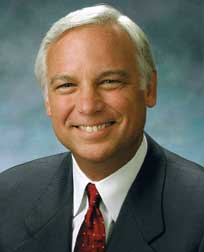 Jack Canfield
Holistic
Health Directory
Alternative Medicine Animal Health Bodywork and Massage Business and Personal Services Counseling and Therapy Education, Schools, Classes Events Natural Foods/ Healthy Products Psychic Arts/Energy Medicine Restaurants and Healthy Dining Retreats, Spas, Travel Spiritual Practices Tools for Living Writing and Books Browse all » |
|||||
|
||||||
| © 1995-2012 The Share Guide → Home | Site Map | Healthy Products | Advertise | Directory |
