
| Holistic Health Magazine & Resource Directory | Home Advertise Contact Us |
|
|
| Health Articles | Interviews | Product Reviews | Bookstore | Holistic Directory | ||||||
| An
Interview with Rachel Remen, MD by Dennis Hughes, Share Guide Publisher Dr. Rachel Naomi Remen is one of the earliest pioneers in the mind/body health field, and was one of the first to develop a psychological approach to people with life-threatening illnesses and educate their physicians about their needs. Dr. Remen has been counseling those with chronic and terminal illness for more than 20 years. She is currently clinical professor of family and community medicine at the University of California at San Francisco School of Medicine, Medical Director of Commonweal and Cofounder of the Commonweal Cancer Help Program in Marin County, California, and author of Kitchen Table Wisdom and My Grandfather's Blessings. The Share Guide: You wrote something in your book Kitchen Table Wisdom that was very profound: "Diagnosis is an opinion, not a prediction." That would go along with the thought that the scientist or doctor will give you as much as he knows, but life is bigger than his diagnostic skills. Dr. Rachel Remen: Right. My own story is an example. I was diagnosed with Crone's disease at the age of 15. They told me I would be dead by age 40. I believed this, of course. I come from a medical family and we all believed it. I made many life plans based on this belief. In my case, nobody offered the possibility that I might be able to survive this illness. I even had 8 major surgeries. But I have not been dead the past 20 years, and I am over 60! Technically speaking, I think you could say I am a disabled person. I can only eat 6 different foods. I am partly blind. But there is often a difference between the facts and the story. I travel all over the country. I have a full life. It's too bad that people need to put out a diagnosis like that, such as "You'll be dead by the time you are 40" or "You only have three years to live." It would be wonderful if we could simply acknowledge the mystery in life, and say to people, "You have Crone's disease" or "You have cancer." This is the diagnosis, but what it will mean remains to be seen. We need to simply accompany people as they discover what their own story will be. The Share Guide: If you look at the word diagnosis, it has the word "gnosis" in it, which means mystery. I believe that's from the Greek. Dr. Remen: Yes, it means "the mystery." The Share Guide: It's important to pay attention to the diagnosis, but not to fixate on it. Dr. Remen: Right. It's an opinion. That reminds me of a wonderful older patient of mine that called me this week to say hello. She had ovarian cancer very badly 13 years ago. Most people think that when they have ovarian cancer that it's the end. For many people it's not the end at all. The Share Guide: Is it due to your strength to resist the disease? Dr. Remen: I don't know. I certainly believed I was going to die. I decided not to have children because I could not finish that. I decided not to marry because I would abandon someone in the middle of their life. The Share Guide: So you went along with the prevalent belief system, but you lived anyway. Dr. Remen: That is where the mystery comes in, I think. People have said to me, "Have you any idea why you survived?" I want to say, "Not the foggiest!" The Share Guide: My own Mom was diagnosed with ovarian cancer, and passed within 90 days of being diagnosed. She was a devout Roman Catholic and ready for the next world. How important a factor is the life force and the will to live for a person's chance of recovery? Dr. Remen: It's quite important. But many of us have a strange notion about what the will to live is. The will to live is part of the mystery in life. It's very different than the wish to live. The will to live isn't a preference; it's an impulse towards life which is in the heart of all living things. It is in the unconscious mind and it's unconditional. It's a force of nature; it is in everything. The wish to live is what most people really seem to be talking about in regards to the will to live. This is highly personal, shaped by our attachments to life. It is our own personal experience with the life force itself. It is larger than ourselves, but we can find ways to collaborate with it and strengthen it. I think that most people that have had the kind of experience that I have had working with people with cancer (going on 29 years now) know there is a lot of mystery here. I spend a lot of time listening to people's stories. I have seen so many people that have wanted to live and didn't. I have also seen many people who have not particularly wanted to live, and have lived. I see people living when they have no business living; they should die from this thing because it is so overwhelming and they manage to live in spite of it. I have seen people die for no reason I could figure out. So there is a lot of mystery here and it's very frustrating to people. We are a culture of control, we want to be in control of things. We want to see cause and effect: if I do this then this happens; if I don't do this then that happens. But life is larger than we are. The Share Guide: I think in my mom's case, her main goal was to raise her kids. Once her husband was gone, she had no urge to remarry. She focused her life around the Church anyway. I think her story was that she did everything that she wanted to do here. Dr. Remen: How beautiful! The Dalai Lama said something "We don't die because we're ill. We die because we are complete." The Share Guide: Yes, that is important. Dr. Remen: Very profound. The Share Guide: I have this vision that when I am on my deathbed, I don't want to have any regrets. Dr. Remen: My own mother decided she wanted to have open heart surgery when she was in her 80's because she had a condition that meant she would surely die if she did not have the open heart surgery. The morning of the surgery I arrived before they took her upstairs. I walked in and she looked at me and said, "Oh, I am so glad you are here! I just wanted to tell you something. I just want to be sure that you know that no matter what happens, I am satisfied." How do we live so that at the end of our lives we might be able to say, "I am satisfied." That is a worthy goal in life. The Share Guide: So if there is anything you deeply want to do in life, do it while you can? Dr. Remen: I wouldn't say that. That might get you following an awful lot of things you might regret. However, the things that are most deeply meaningful, do them any way you can. Don't hold back because you can't do them perfectly. The Share Guide: Here is a different scenario. A person might be feeling well and go to the doctor for a routine check up. They discover that they have a drastic diagnosis and then after that become ill. Or they might ignore dire predictions and get well. How much does the mind contribute when we believe in these things? Dr. Remen: Is there a particular story you are referring to? The Share Guide: I was thinking about a story from Kitchen Table Wisdom--the story of one gentleman who was riddled with cancer in his bones and organs. He was expected to die but he recovered completely. Dr. Remen: You mean the wonderful story from Sloan Kettering Hospital about spontaneous remission. There was this man who had been through chemotherapy that had stopped working. He went to the hospital to die. This was many years ago; there was no Hospice then. He had a miraculous recovery. Things happen all the time that cannot be explained, that are profoundly mysterious. That was one of them. It's so un-American--the fact that life is based NOT on science but on mystery. Things happen that we can't measure or explain. All we can do is observe them and be inspired by them. I think we have been caught up by science here, Dennis, and technology, as if science is going to define life for us. The Share Guide: Yes, this is the story I was referring to. Dr. Remen: All these lesions this man had (right under our noses, so to speak) went away and never came back! Were we in awe about this? No. We were frustrated as doctors. So we had to confirm the diagnosis by sending out slides for reanalysis. The diagnosis was a very malignant cancer. The conclusion that people came to was that the reason all these lesions had gone away was that the chemotherapy, which had been stopped 11 months before, had suddenly worked. Amazing! I think that too much "scientific objectivity" can actually make a person blind. The Share Guide: I think you call that selective inattention. Dr. Remen: That's what it's called in psychology, but in just plain talk I'd say: it's hard to think outside of the box. But that is where life is! Outside of the box! The embarrassing part about that story, which I don't mention in my book, is that I never questioned that conclusion (that the chemotherapy had worked 11 months later) for 15 years. The Share Guide: So you were thinking inside the box with your peers? Dr. Remen: We all think inside of the box. All of us have certain ideas about life. Often we can't see life because we are always seeing with those boundaries. The Share Guide: Do you think we have the power to decide to go and just let go? Dr. Remen: I don't think so. Certainly not from what I have seen. I have seen people who very much wanted to die and did not. I think that there are other issues here--issues of mystery, issues of karma. The Share Guide: We have to accept the mystery. . .but some people linger in terrible pain for a long time. Dr. Remen: And you say to yourself, "Why is this?" I think we need to look at life as larger than science, and not allow science to finalize things for us. Each one of us is a Mystery, and when I say "mystery" I mean that with a capital M. The Share Guide: To me, a lot of what this comes down to is just acceptance. Dr. Remen: Many years ago, in one of my earlier surgeries, I asked the anesthesiologist if he could tell me just before he pushed the medicine in my arm that would put me to sleep, because I wanted to say a prayer. When he said he was ready, I said something called Shema which is the basic prayer of Judaism, "Hear, O Israel, the LORD is our God, the LORD is One." I interpret it this way: There is no place in the universe that is not held in the hands of God. It is a statement of surrender but also of safety. The surgeon leaned over and said, "Was that a prayer?" and I said, "Yes, it was." He said, "Oh, let me say out loud the thing I say before every surgery I do. "Dear LORD, help us to do here whatever is most right." I had been very frightened up until that point. Suddenly I realized that there are no mistakes on the deepest, most mysterious level. Everything has a purpose in this profound experience. I was NOT in danger. I might die, but I wasn't in danger. I remember an enormous sense of calm came over me, and then I woke up in the recovery room! The Share Guide: I believe that it's true for surgery, but also for life in general--the idea of starting your day with a prayer, mantra or meditation. To be in tune with the positive is the best way to enter your office, or the operating room or your car, or anything. Dr. Remen: I am not sure what you mean by "in tune." The Share Guide: In harmony with higher forces, the positive good will of the universe. You can call it God if you want, or the spirit in general. Dr. Remen: The prayer I often use silently for my patients before I see someone is, "May I be used for the good." I may not understand everything, but I am available to be used. I think where we go off course, is when we start to do what is called petitionary prayer. This is basically saying, "I want this. Make this happen for me." The Share Guide: Like a Wish List. Dr. Remen: Right. It may come from our deepest heart that we wish certain things to go in certain ways, but I don't think that's what prayer really is, do you? The Share Guide: The most open prayers are like what you said, "Let me be used," rather than, "This is the way I want to be used." Dr. Remen: Yes, I agree. I think that when we pray, we remind ourselves about the nature of the world. We don't change the outer world, we change our inner consciousness. We move from this kind of individual, isolated, egocentric,"I'm the cause of everything, make it happen" kind of consciousness to a connection on the deepest level. It's a larger reality that is by nature mysterious, something we can never know but we will feel its presence in our lives and in the lives of other people. It becomes an act of surrender when you orient yourself at the beginning of your day towards the highest possible purpose. Not controlling, but surrendering. You used a word earlier that means a great deal to me because there is lots of power in it. The Share Guide: Which word? Dr. Remen: Acceptance. Prayer is a doorway into acceptance, which is the first step in having things change. That is one of the great paradoxes. The Share Guide: I am envisioning my readers, those of whom are ill, or perhaps have a friend or family member who is ill. I am thinking of helping by publishing this interview, by giving them insight in how to deal with this very difficult part of life. It is hard however old or young you are when you face life-threatening illness. Dr. Remen: Life is precious no matter how old you are. I remember my mother said to the cardiologist, who happened to be about 50 years younger than she, "Young man, I want to be sure that you understand that my life is as precious to me as yours is to you." The Share Guide: Death and dying is a taboo subject in this country. All of the advertisements talk about being young and happy. There isn't a lot of respect in this culture for the wisdom of the elderly like there is in China, for example. Dr. Remen: It's not just the elderly. What about respect for suffering? The Share Guide: We tend to shy away from this. Dr. Remen: We are not a kind culture. We have contempt for the parts of ourselves that are capable of suffering. The Share Guide: When we take medication, we also shut off our feelings. I think there are a lot of people who don't ever think about this subject until they get there, because it's one that they want to avoid! Dr. Remen: Right. I must say this, no two people experience a disease in the same way. The Share Guide: Everybody is an individual. Dr. Remen: It's as individual as their own fingerprints. Every suffering, every disease, every loss, every disappointment has meaning. There is in every one of these things a potential to be more than who you were before this thing happened to you. Sometimes people can take steps into that potential, sometimes they can't. Significant illness is transformative. You are not the person who you were before this happened. The Share Guide: So you believe that suffering can be a doorway into transformation? Dr. Remen: Yes, I think it can be. Many of the world's religions speak of this. But there are other ways to be transformed. . .becoming parents, or falling in love. Among the many life-altering things that happen to us, suffering is one of them. This moves it from a tragic catastrophe (which it always is, by the way) and allows us to grow beyond it in a very interesting way. For example, when I was 27 it turned out that I was going to need this very major surgery. I remember my doctor telling me about this. He took his fist and bashed it into the wall. I was a young woman at the time. I could tell two things: one is that he obviously cared deeply about what was happening. Two, he felt somehow or other that he hadn't been able to protect me from being diminished. I wish I could tell him now that he sold me short. All of the remarkable things that I have had in my life and all of the wonderful experiences I've had--meeting with other people, and knowing them and nurturing their strength, all of the writing and traveling--I don't think any of that would have happened had I not had Crone's disease. I think I would have turned into the head of the department of pediatrics in a major medical school, which is where I was headed. The Share Guide: In other words, your own problems caused you to grow. Dr. Remen: Exactly! Growth is a strategy of being moved by adversity to grow larger than the things we have to live with. Any single mom can tell you that! We have the capacity to find within ourselves something we never dreamed was true. I suspect it's called forth from us by the actual difficulty which faces us. Growth is a coping strategy. The thing that my doctor didn't know was that it is possible to have a good life even though it isn't an easy life. I have met many people who have easy lives and are profoundly depressed. The Share Guide: Because they haven't grown that much? Dr. Remen: They have no reason to live. No one needs them; nothing matters much to them, and they don't matter to anybody. The Share Guide: It's clear that illness can intensify feelings of isolation. How big of a problem do you think this is, and how much does it factor in the healing process? Dr. Remen: It's very important. Illness does a couple of things: one is that it intensifies the feeling of isolation, and two is that it uncovers a feeling of isolation. There are people who haven't realized that they were not connected to other people until they become ill. They have lived among other people for years and never connected to anybody. They lived essentially alone right in the middle of their family. No one knows what they think, no one knows how it is for them, because that was the style of the family. Illness breaks that open. Many people with cancer have said to me, "I had no idea my life mattered to so many people." When I went into the grocery store with my scarf on my head, the woman cashier that had been ringing me up for years spoke to me and said how sorry she was, and how she often looked forward to my smile. I had been coming there for years and had no idea. What you discover, through your vulnerability becoming visible, is that everyone else is vulnerable too. People are able to express to you that it doesn't matter. Conversely, the people we expect to be there for us, some of them are, but some are not. People who you wouldn't even imagine step forward. You have no idea you meant so much to them. There is a web of connection that exists between us. When we become sick, then the web of connection becomes absolutely clear. The Share Guide: You have mentioned in your book that sometimes people feel awkward dealing with those who become critically ill. Like the story of the running partner who suddenly stopped showing up when his running mate was diagnosed with cancer. Dr. Remen: This because many of us don't know that our love matters. We are a technological culture, so we think that we are supposed to be able to fix people's problems. Or we think there is a "right" thing to say. People want to be comforting, but they don't know how to do that. What I have discovered is that the simple human connection is what matters. Nobody expects you to fix their lymphoma or breast cancer, but people expect or hope that their suffering really matters to you. All that's needed is to say, "I heard about your illness, I am so sorry." Just say it and really mean it; say it from your heart. There is nothing more powerful. I remember one of the most profound things that ever happened to me when I was young, in the midst of my really severe suffering with my illness, was when this person came to me and said, "You know, I heard that it's been hard for you. I'm so sorry." Then their eyes filled with tears. I knew my life mattered. I knew that they cared about me. I felt strengthened to go on. They didn't fix a thing about me; they were just real. Some of us feel being real isn't enough. We think we are supposed to be an expert and have the right words and the right answer. We ARE the right answer! The Share Guide: Some people believe that illness stems from emotional blocks or feelings that haven't been dealt with. What are your thoughts on this? Dr. Remen: Life is rarely as simple and black and white as this. Many people with emotional blocks do not become ill, and many people without emotional issues do not recover from illness. There is a lot of mystery in life. As much as people discuss this idea, the present research does not firmly support this conclusion. There are some poorly designed studies available, but definite research is still needed. However, there is no question that stress and emotion can exacerbate illness and make it more difficult for us to recover. That and the way that we feel about ourselves and our illness may limit our capacity to live fully and passionately. The Share Guide: How much acceptance do you think alternative or complementary medicine has gained in regard to the treatment of life-threatening illness? Dr. Remen: Many people combine alternative and conventional treatment (the new field of Integrative Medicine) but very few people use alternative treatments alone when their diagnosis is cancer. The Share Guide: In Kitchen Table Wisdom, you talk about learning in medical school not to show care or emotions. Do you think this approach is changing in medical schools yet? Dr. Remen: It's changing radically. We could be talking for hours just about this subject. I am a full professor of clinical medicine at UCSF School of Medicine, as well as the founder of The Institute for the Study of Health and Illness at Commonweal. The Share Guide: That's the program for doctors, isn't it? Dr. Remen: Yes, that's the one for doctors. Eleven years ago I developed a course, basically enabling first year medical students who are still in the spirit of service and filled with the privilege of being able to help other people. Many studies of medical students across the country show that by the first year as doctors they are cynical, burned out and depressed. There is something in the process of medical education that kills the soul, if I may be so strong in saying. So we devised a course that would enable them to strengthen themselves and those around them, and to maintain the integrity of medicine with compassion, harmlessness, altruism, service. I see medicine as a spiritual path characterized by these traits. I started an experiential discovery model transformational course for freshman medical students at USCF 11 years ago. It has become the largest elective course in the school. Most of the students are taking it. Last year it was also taught at Yale Medical School and Dartmouth. Next year it will be taught at 20 medical schools throughout the country. The Share Guide: In addition to being a professor, I know you are involved with the organization Commonweal based in Marin County, California. What is your current role there? Dr. Remen: I am the Founder and Director of the Institute for the Study of Health & Illness at Commonweal, the Co-founder of the Commonweal Cancer Help Program and the Medical Director of Commonweal. The Share Guide: Because the website states there's a waiting list for Commonweal retreats, can you recommend any similar programs available to our readers? Dr. Remen: Since 1993, Commonweal has trained others to do this sort of retreat work. It is through our CCHP Tradecraft Training Retreats. I can recommend the Tingsha Program in Pt. Reyes, the Smith Farm Program in Washington, DC, and there are several others. People can call Commonweal at (415) 868-0970 for this information. The Share Guide: Did you ever see the movie called "The Doctor," with William Hurt? Dr. Remen: I have heard about it but I haven't seen it. The Share Guide: It's this story about a successful doctor who's very business-like and abrupt with his patients. Then he is diagnosed with cancer and has to become a patient himself. So there is a role reversal, and he discovers his humanity as a result. Dr. Remen: What we think is that a doctor is a person that does not suffer. When they suffer, then they understand. My experience is that doctors are suffering greatly. Here in California, 50% chosen at random are clinically depressed. One out of three practices is closing. What that means is that five years from now we are going to have a major doctor shortage. A lot of people are saying that they can't go on, and they don't know why they went into medicine. They went into medicine to help people. The Share Guide: So they are suffering from the business of medicine. It's getting in the way of healing. Dr. Remen: Right. We now have an economically driven system doing something which is intangible. Let's put it this way: the values of business and the values of medicine are not compatible. In medicine, every human life matters. Economically speaking though, it's supposed to be the greatest good for the greatest number. These are in direct contradiction to one another. It's very hard for the business people to admit that. Every human being is worthy of the best we have. When doctors are not supported in giving their best day after day, the very best doctors leave the profession. The Share Guide: Sounds like the difference between the fast food restaurant philosophy, "turn them out quick and all the same" vs. actually sitting down to have a long, slow dining experience, going in depth. Dr. Remen: It's about being nurtured. For example, you are nurtured by your food. If you take the best chef in the world and you give them 10 minutes to put something on the table, they could throw something together, but it's not what they are capable of. If they are forced to do this day in and day out, their soul dies, because they are not doing what they were born to do. The Share Guide: I always spend considerable time before each interview reading and preparing, but this particular interview is basically about summing up life and preparing for a transition. It's like summing up all 62 issues of The Share Guide and all the themes: once we've done it all, we've exercised, eaten our vitamins, created a healthy lifestyle and been nice to everybody, then what? We look at ourselves and wonder, "Have we really lived life fully?" Dr. Remen: Let me say something interesting. There gets to be a place in chronic illness where you realize that being ill is not going to stop you from living well. That's where your freedom lies. Yes, I'd love to see perfectly, I'd love to be able to run three miles. I can't do those things. But the quality of my life is so much deeper than it was when I was able to do those things. So there's a freedom to transcend your illness, not by curing it necessarily, because a cure is not available to everyone, but by making your life larger than it is. Growth is possible for everyone, even if a cure is not. For more information about Dr. Rachel Remen visit her online at www.rachelremen.com. For more information about Commonweal visit www.commonweal.org or call (415) 868-0970. Related Articles: Mind-Body Therapies: When Understanding is Not Enough Cancer: Embracing the Healing Journey Bernie Siegel, M.D. on mind-body medicine Larry Dossey, M.D. on holistic medicine and prayer A New Understanding of Alternative Medicine Articles Index |
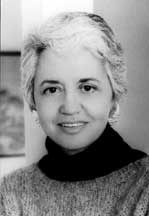 Rachel Remen, MD Holistic
Health Directory
Alternative Medicine Animal Health Bodywork and Massage Business and Personal Services Counseling and Therapy Education, Schools, Classes Events Natural Foods/ Healthy Products Psychic Arts/Energy Medicine Restaurants and Healthy Dining Retreats, Spas, Travel Spiritual Practices Tools for Living Writing and Books Browse all » |
|||||
|
||||||
| © 1995-2013 The Share Guide → Home | Site Map | Healthy Products | Advertise | Directory |
